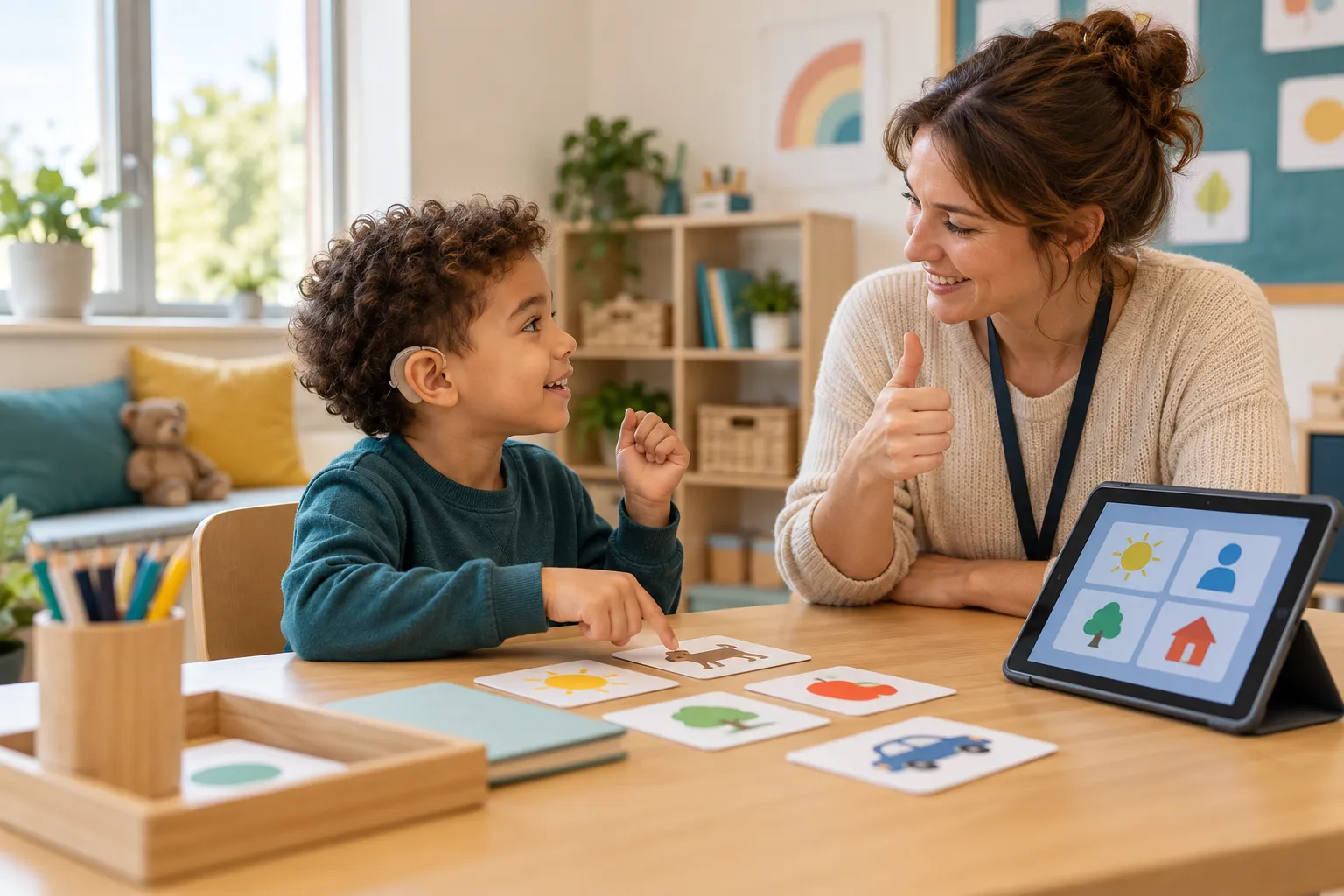
Children with hearing needs can do brilliantly in school when the environment is set up for them. The goal is simple: make sure information reaches them clearly, in more than one way, so they never miss out because they couldn’t hear.
Make sure they can see your face
For many children who are deaf or hard of hearing, lip-reading and facial expression carry a lot of meaning. When you speak:
- face the child and keep your face in good light
- don’t cover your mouth or talk while writing on a board
- reduce background noise where you can
The same habits help at home, in the classroom and during one-to-one sessions.
Use visual support alongside speech
Pairing speech with something visual gives the message a second channel to arrive through:
- written keywords, pictures or diagrams
- gestures and pointing
- written instructions as well as spoken ones
- captions on videos
When a child can see what is being said, understanding stops depending on hearing alone.
Check understanding without singling anyone out
Hearing aids and cochlear implants help, but they don’t recreate natural hearing — noisy rooms are still hard work. Rather than asking “did you hear that?”, which a child may nod along to, ask them to repeat back a key instruction in their own words. Do it warmly and privately, so it feels supportive rather than like a test.
Pace learning and build in listening breaks
Concentrating through hearing takes effort. Shorter instructions, one at a time, and regular pauses give a child’s ears and attention a chance to recover. That matters even more at the end of a long school day, when listening fatigue is highest.
Work with school and specialists
Teachers of the deaf, SENCOs and your child’s audiologist can all advise on classroom adjustments such as seating, sound-field systems and radio aids. A clear conversation about what works at home is the fastest way to get the same support in class. Our guide on talking to your child’s school about SEND support walks through it.
How Edjuvera can help
Our experienced SEND tutors keep sessions visual, well-paced and low on background noise, and they check understanding in ways that build confidence rather than pressure. Read more about how we support hearing impairment, or get in touch to talk it through.