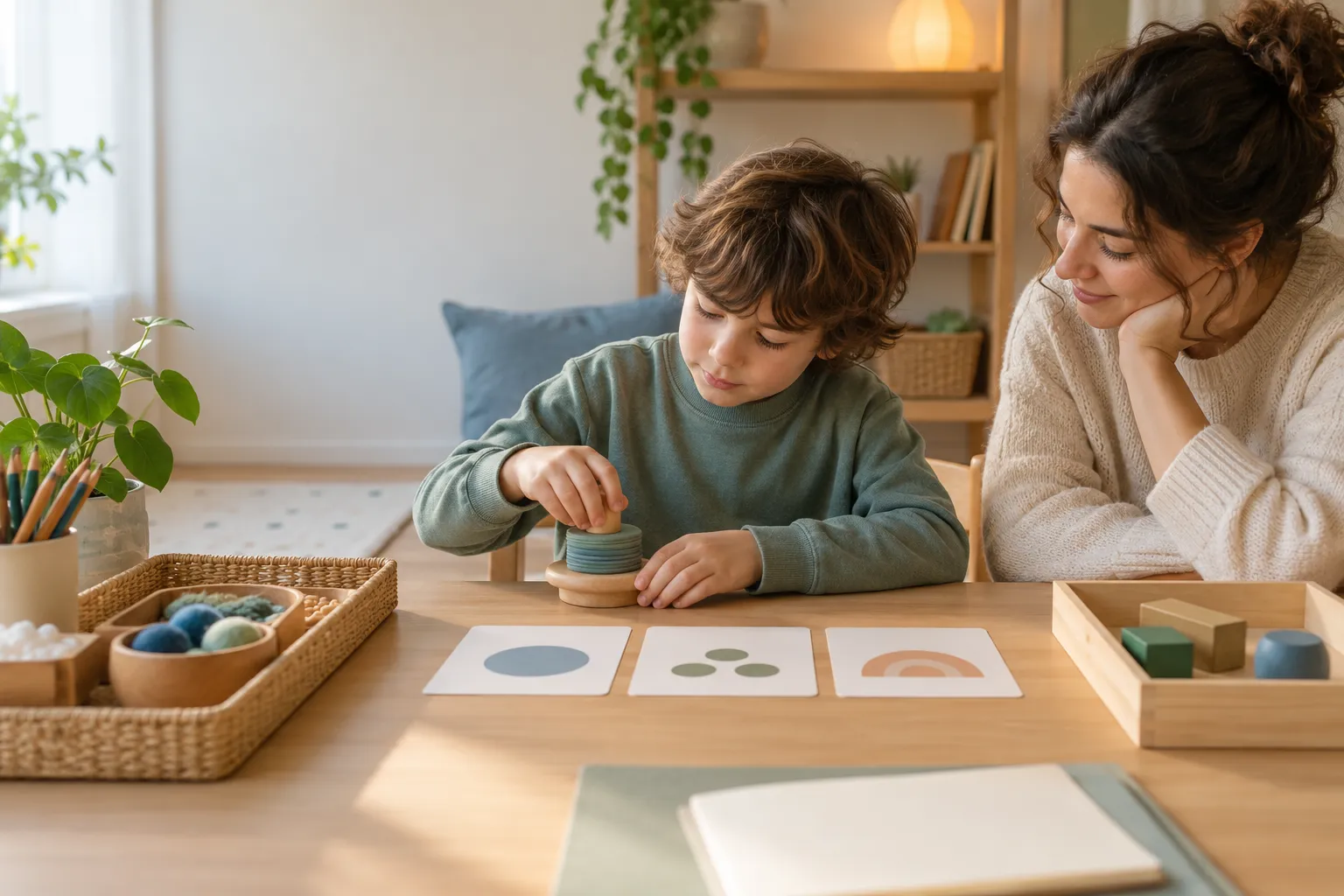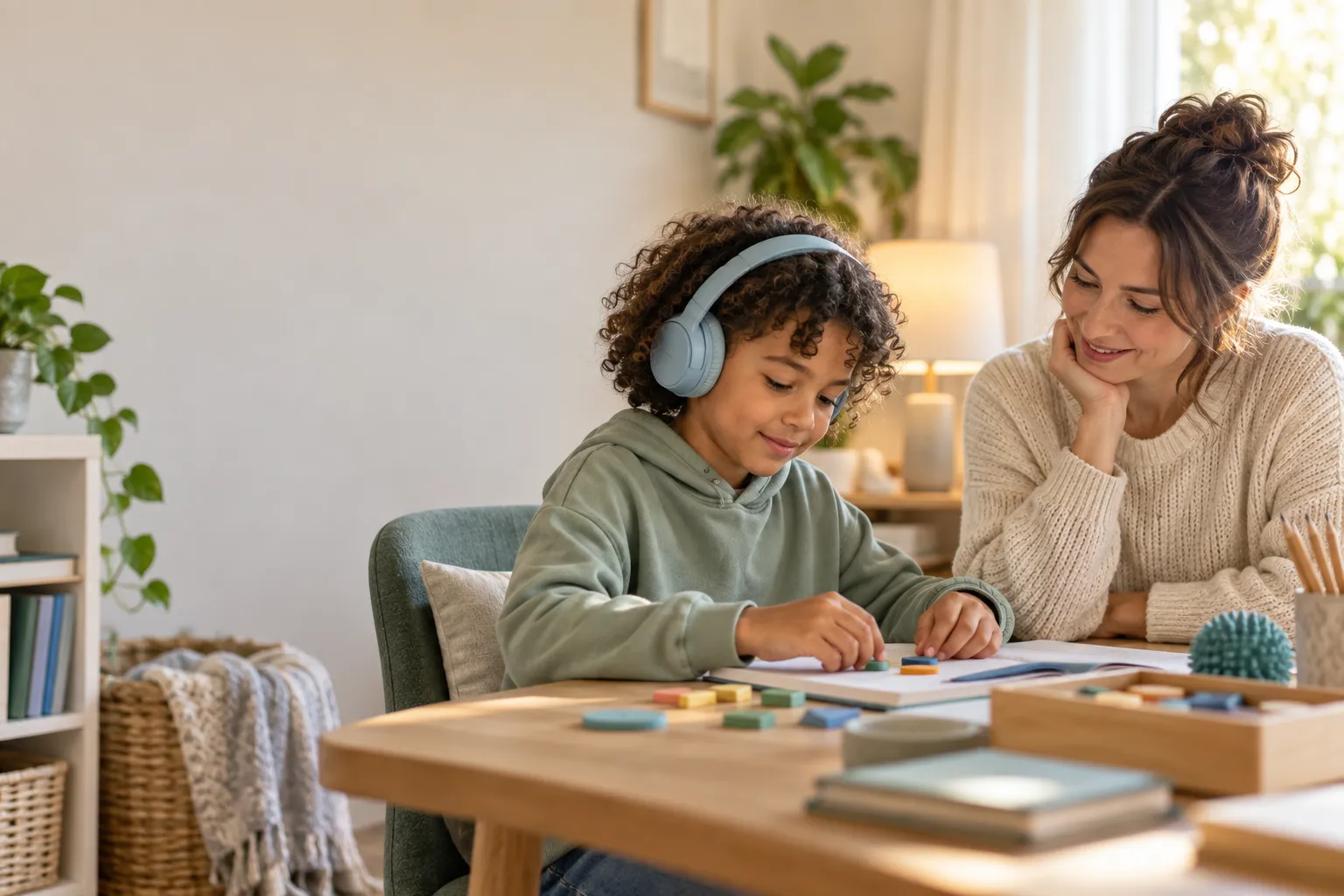
Some children process sounds, sights, textures and movement differently from those around them. For them, an ordinary classroom or homework table can feel loud, bright, scratchy or unpredictable — and learning quickly becomes exhausting. The good news is that small, deliberate changes to the environment can make a real difference, and none of them need to be complicated or expensive.
What sensory processing differences can look like
Sensory differences show up differently in every child. You might notice a child who:
- covers their ears at everyday sounds, or tunes out when a lot is going on
- is bothered by certain textures, clothing labels or foods
- seeks movement, fidgeting or rocking to stay regulated
- finds bright or busy rooms overwhelming
- needs to move before they can focus
None of this means a child is being difficult. It usually means their nervous system is working hard to process input that others filter out without thinking.
Notice patterns before you change the space
For a week or two, make a quick note of what was happening just before your child became unsettled, what they did, and what helped. Look for patterns rather than trying to find one perfect explanation. Tiredness, hunger, transitions and busy rooms can all make sensory differences more noticeable.
Start with one sense at a time
Trying to change everything at once is overwhelming. Instead, watch for the moments when your child seems most comfortable and most distressed, then adjust one thing at a time:
- Sound — offer quiet breaks, headphones or a calm corner away from background noise.
- Sight — reduce visual clutter, use soft lighting and keep the desk clear.
- Touch — let clothing, seating and materials feel comfortable before learning starts.
- Movement — build in short movement breaks rather than asking a child to sit still for long stretches.
Build a calm base for learning
A predictable, uncluttered space helps many children feel safer. Keep only the materials for the current task on the table and put everything else away. A visual timetable or a simple “now and next” card can reduce the mental load of wondering what is coming next.
Consistency matters as much as the space itself. The same seat, the same order of activities and the same gentle start to a session all help a child’s body learn that this is a safe place to concentrate.
Make regulation part of the plan
Movement is often the fastest way for a child to reset. Between tasks, try a couple of minutes of stretching, a walk to get water, pushing against a wall or squeezing a cushion. A short, predictable break usually buys more focus than pushing on through. Some children settle with deep pressure, music or a quiet drink; others need less input, not more.
Plan the break before learning starts and make it easy to return: “first ten minutes of reading, then water and a stretch.” That keeps regulation supportive without turning it into another demand.
Let the child lead
Children are the experts on their own comfort. Where you can, offer choices — “would you like the lamp on or off?”, “shall we stand or sit for this part?” — and respect the answer. When a child feels in control, learning stops being a battle. The aim is not to remove every challenge; it is to give them enough safety and control to take part.
How Edjuvera can help
Our experienced SEND tutors plan sensory-aware sessions from the start — a predictable structure, movement breaks, fewer distractions and materials chosen around each child’s comfort. You can read more about how we support sensory processing differences, or book a free consultation to talk it through.