Dyscalculia is a specific learning difference that affects how the brain understands and works with numbers. It isn’t the same as simply finding maths hard, and it has nothing to do with intelligence. With the right, concrete support, children with dyscalculia can make real progress and rebuild their confidence in maths.
Signs to look for at home
Dyscalculia can show up early and in everyday moments. You might notice a child who:
- struggles to recognise how many objects are in a small group without counting
- finds it hard to remember number facts, like times tables or simple sums
- loses their place when counting, or reverses digits
- finds estimating, money, time and directions confusing
- avoids maths or becomes anxious when numbers come up
A cluster of these signs, especially alongside good skills elsewhere, is worth exploring.
How it is supported
Support for dyscalculia is practical and hands-on. It usually involves:
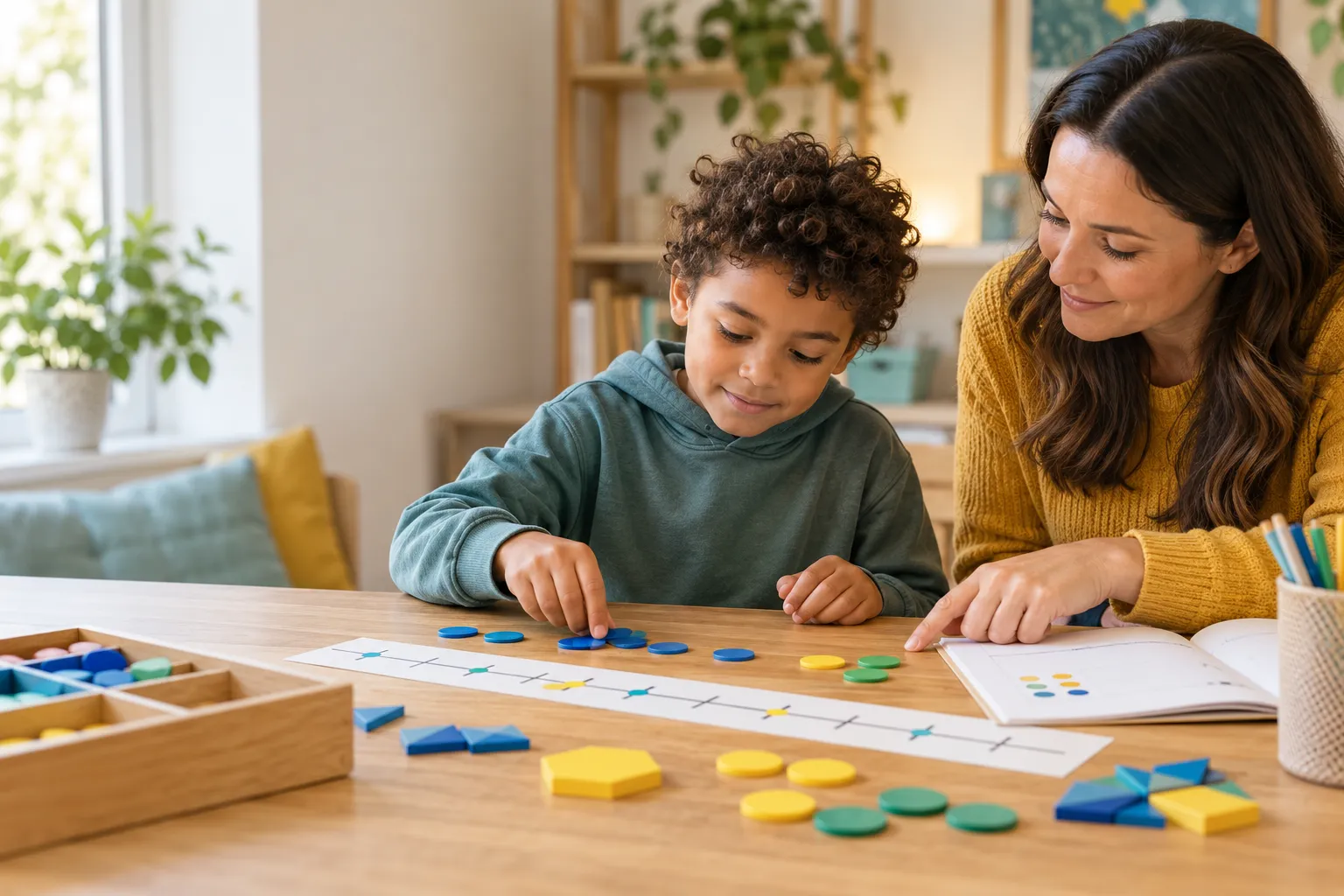
- using real objects, counters and number lines so numbers become visible
- teaching one concept at a time and practising it until it sticks
- building number sense slowly before moving on to procedures
- reducing reliance on memorising facts, and showing why a method works
- using tools like a hundred square or a calculator where they help
The aim is understanding first, speed later.
What to do next
Talk to your child’s class teacher or SENCO about what you’ve noticed, and keep a note of specific examples from home. An educational psychologist can assess for dyscalculia, but support doesn’t need to wait for a diagnosis. Starting with concrete, visual maths help early makes the biggest difference.
How Edjuvera can help
Our experienced SEND tutors teach maths through objects, pictures and small, steady steps that protect a child’s confidence while the understanding builds. Read more about how we support dyscalculia, or get in touch to talk it through.